Why Most Restaurants Shouldn’t Do Tasting Menus
Joyless meals taught me the wrong lesson.
I’m a clown at heart. I go to restaurants to laugh. A few weeks ago, I asked a chef about the line‑up of ground peppers on the menu. He disappeared and returned with a plate and a couple of pepper mills. He ground each onto the plate, buzzing, and told me to lick a finger and taste the world’s weirdest Dip Dab. First up: Penja from Cameroon, then Voatsiperifery from Madagascar. My mind was blown. Another table across the floor clocked it and asked for a taste. Wonder and smiles, an honest moment that sat outside the script. I like rooms where the staff look like they want to be there, where plates arrive with warm hands and warmer eyes. You can read a place from the way a team moves. If the smiles are real, the food usually is too. The opposite is easy to spot. Starch. Scripts. The hush that tastes of nothing. I used to tar tasting menus with that brush.
A couple of years ago I decided I didn’t like them. Too stiff. Too serious. Ceremony without life. In truth I’d had middling food and joyless service. I mistook the symptom for the disease. Since then I’ve sat through a few that were alive. A dining room with a pulse. Teams having fun without making it about them. Cooking that understands scale and time. I changed my mind. When a tasting menu lands, it can be one of the best nights you can buy.
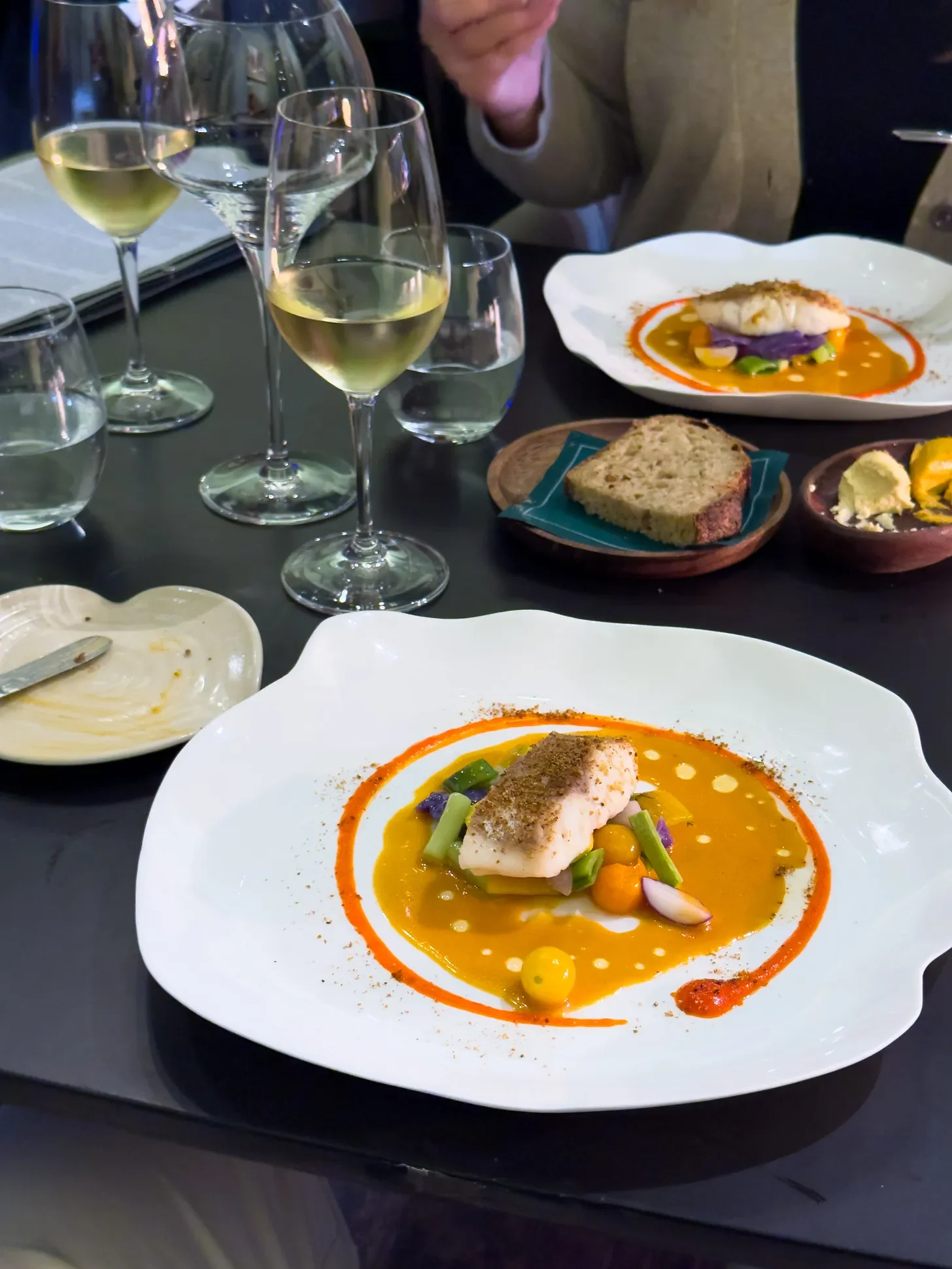
The craft is different. An à la carte main has to carry fifteen bites; it needs ballast. A tasting dish can sprint. It hits with intensity, then gets out before it cloys. Big flavour in small space. Salt without fatigue. Fat with a chaperone. Acidity doing the housekeeping. The chef designs a path, not a pile. There’s a reason the dish that dazzles at three mouthfuls would bully you at thirty. Good menus pace. They let you breathe. They drop the volume, then bring it back. Think album, not playlist. Structure matters.
Great ones also treat your palate like a space that needs resetting. Warm broth fogging the lip. A slice of raw fish that tastes like clean stone. Heat on the knuckles as a hot plate lands. Bitter greens that sweep the corners. The work lives in the gaps: where to put the saline crunch; when to let sweetness in; how to route you through smoke without leaving soot. This is composition, not collage.
Service is part of that score. It doesn’t need to be solemn to be sharp. The best nights I’ve had on tasting menus were handled by teams who knew when to lean in and when to leave me alone. A quick line about the fisherman because it matters. Then silence. A shared joke because I looked like I needed one. Then space. It’s choreography, not fuss. You can taste the difference between reverence and fear. Reverence eats well. Fear eats like cold starch.
There’s surrender involved. And yes, it costs. Time, too. You’re paying for planning, waste kept in check, and a small, focused team practising the same moves until they’re clean. That unsettles some people, especially in a culture that worships choice. We like to be in charge, to pick the fish and the sauce and the sides, and to believe that more options mean more care. A tasting menu asks you to hand over the keys. I find that bracing and, oddly, freeing. You decide who to trust and then you let them drive. There’s risk in it. That’s why it’s exciting. If you never want to be surprised at dinner, you’re shopping, not dining.
The bet isn’t blind. Good houses earn it. They show you what the fisherman pulled, not a storybook. They answer straight when you ask where the lamb grazed or why the strawberries taste like they’ve been sunbathing. They adjust without drama when you say coriander ruins your life. They don’t perform hospitality. They do it. You can feel that in the way they pour, in the way they watch without staring, in the way they fold a napkin like it matters, because to them it does.
A useful correction for diners: you don’t need to love everything. Expecting ten perfect hits is fantasy. Perfection belongs to spreadsheets, not dinner. I’ve had dishes that weren’t for me, and still admired the work. A bitter note that made sense on paper. A texture that missed my mark. It happens. The point is the path, not every paving stone. If the space is honest and the cooking’s thinking, take the miss as part of the map. Ask why it’s there. You might learn something about your own palate. You might learn something about theirs.
There’s also a quiet practicality no one talks about, maybe because it sounds unromantic. A fixed menu can make better kitchens. Fewer bins. More focus. Fish handled at its peak because tomorrow it becomes a broth that’s been planned since Monday. Stocks that taste like someone cared because someone had the time to care. When a team repeats a dish for weeks, they don’t get bored if the culture’s right. They get good. Margins improve, sure, but so does the food. Restraint is a flavour.
Attempt a tasting menu only when you can meet a few hard standards. There’s no room for tasting menus in average restaurants. A set menu asks for rare concentration: sharp shopping, daily prep that builds flavour over days, a calm pass, and a team that can hold a mood for three hours. If you can’t keep fish at its peak, if your stocks are thin by Thursday, if the floor can’t read a table without a script, you’ve no business corralling guests into ten courses. Cook your four best plates and a sensible pudding. Master that. Then, maybe, write the score.
Another gripe is that tasting menus are theatre: too much stage standing in for flavour. Too much stage, not enough soul. Sometimes that’s true. Smoke machines for people who don’t cook. The answer isn’t to ban stages. It’s to put on better plays. A flourish can serve flavour. Tableside work can be tenderness, not vanity. A broth poured while the fish relaxes on warm porcelain tastes different to one that sweats in a jug on the pass. That isn’t a trick. That’s physics.
I still love ordering a chop and a salad and a bottle that overdelivers. I love coins on a bar and a plate of something that drips. A tasting menu isn’t the top of a pyramid. It’s another road. Some nights you want the long cut with views. You want to be told a story you didn’t expect, in a space that holds you. You want to give yourself over to people who’ve thought harder about dinner than you have time to. That isn’t snobbery. That’s trust.
So here’s my plea. Don’t go to a tasting menu to collect a prize. Go to be moved, or at least nudged. Choose a house with a heartbeat. Read the room. If the team smiles like they mean it, chances are the kitchen cooks like it means it. Ask questions. Listen. Let the arc do its work. If one dish misses, fine. Let the next one speak. If the wine pairing gets weird, lean in. You might find the sip that rewires your map of salt and fruit. You’ll still leave knowing something you didn’t when you sat down.
I want restaurants to feel less like galleries, more like live music. A tasting menu, done right, can do that. It gives the kitchen a score and the floor a rhythm. It puts you in the audience and on the stage at once. It asks for your trust and pays it back in small, bright moments. Steam fogging the pass. Citrus lifting the breath. A smile that lands. The simple relief of not choosing for once, and being well looked after while you don’t.
Surrender isn’t loss of control. It’s choosing who to trust for the night, and letting flavour make the case.