You Think Restaurants Are Expensive?
They are. Here's why.
I heard a story recently, that if a guest goes to a restaurant, orders just right, and drops their napkin a couple of times, then the restaurant makes the princely sum of sweet fuck-all from your visit. Might even cost them.
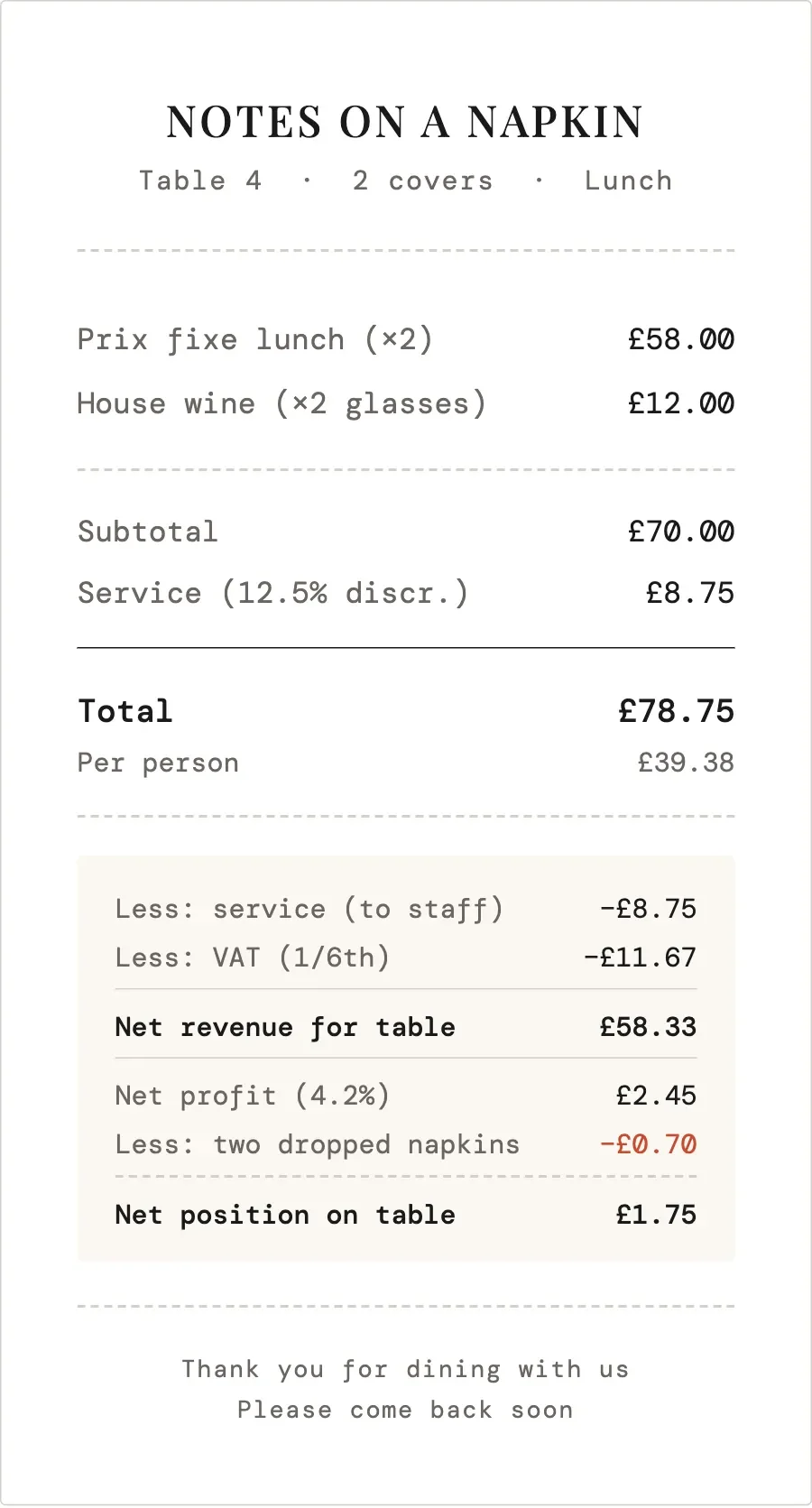
Let’s build two meals. Real numbers, real margins. Starting at the cheaper end.A prix fixe lunch. £29 each.One glass of house wine: £6 each.Discretionary service at 12.5%: £8.75.Total bill: £78.75 for two.First thing to understand about that service charge — it’s not the restaurant’s money. Not one penny of it. Since October 2024, the Employment (Allocation of Tips) Act makes it illegal for an operator to keep any of it. It goes to the people who looked after you. All of it. Which is right. But it means the number the restaurant is actually working with is £70.Oh, but wait a moment, I hear you cry. If you read my recent article on VAT, you’ll know that Rachel Reeves has also taken her share.So we take off VAT. One sixth of every pound you spend on food and drink in a licensed premises goes to HMRC before the restaurant has paid for a single thing. Net revenue: £58.33.The average net profit margin for a UK restaurant is 4.2%. On £58.33, that’s £2.45 for the table.Now. A linen napkin costs around 35p per guest. One napkin per person is in the budget. If both of you drop yours, and we bring you fresh ones, the profit on your table is around £1.75.
That’s the cheap end. Now imagine that evening, different table, different budget.
Two people spending seriously.
Scallops at £15 each.
Ribeye at £40, fries at £6.
A bottle of good champagne at £80 — half each, which feels like a celebration and costs like one.
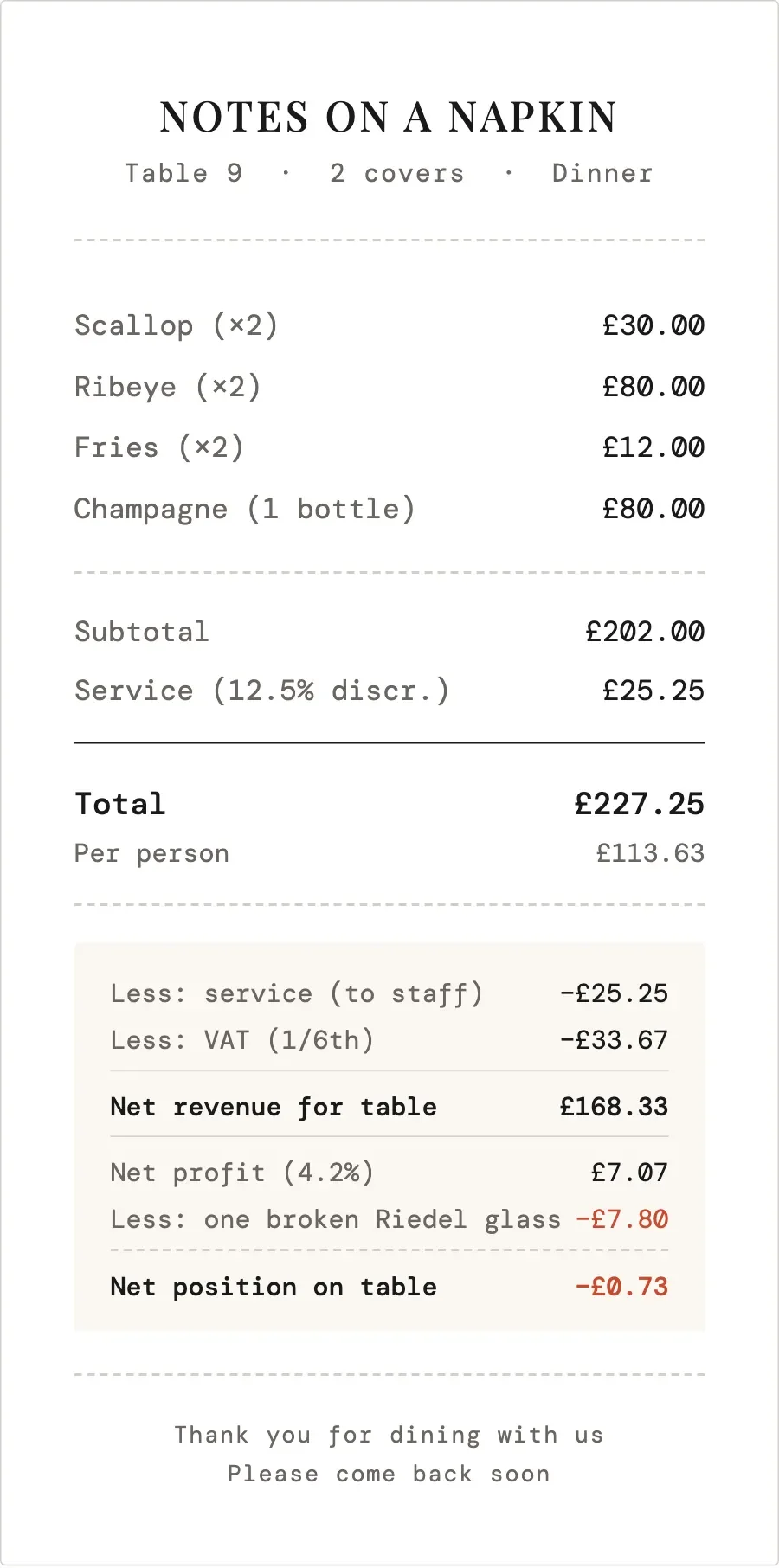
Food and drink: £202.
Service at 12.5%: £25.25.
Total bill: £227.25.
Of that £227.25, £25.25 is service — straight to the team, as above. The restaurant is working with £202.
Strip out VAT: £168.33 net. Now, here’s where the model tweaks. These expensive ingredients, they cost an awful lot to put on your plate. So much so, that at a straight 70%, the margins are perfect and the tumbleweeds are free. So we say, that’s ok, we’ll compromise. Because 55% of a lot of money is a lot better than 70% of a little bit of money.
So, at a 55% gross margin blended across food and wine, that’s £92.58 of gross margin for the table. Then wages, rent, rates, energy, the card machine, the insurance, the forty other things that eat into a hospitality P&L before anyone sees a penny of profit.
Net profit for the table: £7.07.
You might reasonably think a higher-spending table means a higher cash margin even if the percentage dips a little — and you’d be right, in theory. In practice, a more expensive menu usually means a more expensive kitchen to run it. The cash expands. The compromised GP takes most of it back.
Then one of them — having imbibed one too many martinis before dinner — catches the stem of their champagne glass. It goes over. A quality Riedel glass runs about £7.80 at wholesale.
Net position on that table: a loss of £0.73.
The restaurant lost money. On a table that spent over two hundred pounds on food and drink, tipped properly on top of that, and had what sounds like a bloody good afternoon.
Right. So. The menu.
Scallops. Just as we understand that Dove’s £18 burger is a fundamentally different proposition to a McDonald’s cheeseburger at £1.19, scallops occupy a broad spectrum. A dredged medium scallop and a hand-dived king scallop are not really the same ingredient. The good ones — dayboat, native, in shell — can cost up to £6 each at trade. Before there’s anything else on the plate.
At a 70% target margin, one £4.50 Orkney, hand-dived, XL scallop needs to go on the sold at £15 just to carry its own weight. Add garnish — garlic butter, breadcrumbs, a bit of agretti (as we served at Lapin, and bloody delicious I might add) — another £1.20. Add VAT. The price you actually need to charge is £22.80. For one scallop and something green alongside it.
£22.80. The price at which a lot of people put the menu down.
So it goes on at £14. The margin compresses to around 51%. The kitchen absorbs the gap because it’s the right dish and nobody wants to pull it. Not because the numbers make sense.
I had someone tell me recently that for £14, we should be serving two scallops. I understand where it comes from. I do. But my dear friend — the one scallop at £14 is already the compromise. Two scallops at £14 is a fast route to not serving scallops at all, because my restaurant has closed down and I’m living under a bridge in the darkest depths of Somerset.
The ribeye follows the same logic at higher stakes. A 300g portion of proper dry-aged beef — named farm, aged correctly — costs £13 to £15 at trade. At 70% margin plus VAT: £56. Which is exactly where it sits on a London menu doing it properly, and the price that makes people go quiet for a second before ordering it anyway, or not.
So. The £227.25 dinner for two, bill and service combined. The £25.25 goes to the team, and £33.76 goes to His Majesty(‘s Revenue & Customs). The food and drink revenue — £168.33 — runs through every cost the operation carries, and what comes out the other side is around £7.
Seven pounds. From a table that ate well, drank well, tipped properly, and went home happy.
No one’s the villain in any of this. The guests spent real money. The operator didn’t pocket the difference. It went through wages, suppliers, HMRC, the landlord, and what was left could buy a (shit) sandwich.
The £23 scallop isn’t greed. It’s a restaurant doing the maths honestly and hoping the room agrees.
And if it doesn’t — if the price is too much, if the menu goes back down on the table — that’s fine. That’s a fair decision to make. Just know that the alternative isn’t a cheaper scallop. It’s no scallop. And eventually, if enough people make that call, no restaurant.
So if you go out for dinner, order the scallop, and the steak, and please, for the love of god, don’t knock over any glasses.